
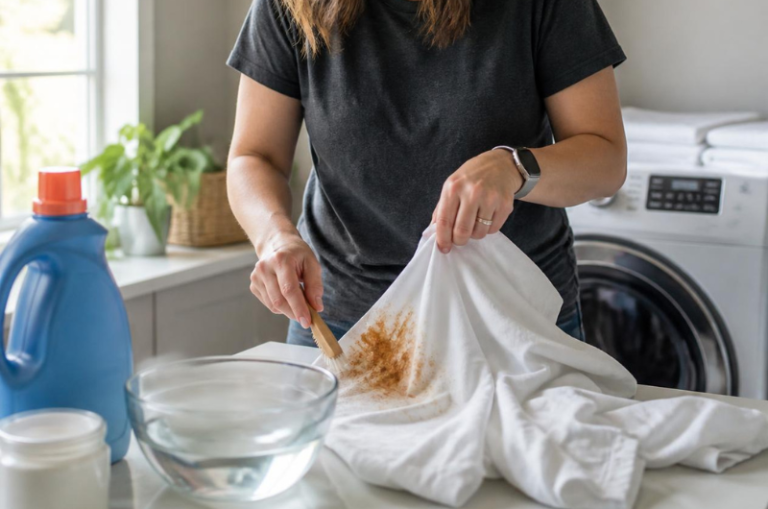
Rust stains are one of the most stubborn marks you’ll ever find on a garment. Unlike food or grass stains, rust is a chemical compound (iron oxide) that bonds to fabric fibres rather than sitting on the surface. This is why so many people struggle to remove rust stains from clothes using ordinary washing powder alone. In this guide, we’ll walk you through proven, UK-friendly methods to remove rust stains from clothes at home, explain which techniques suit different fabrics, and cover what UK consumer law says if a dry cleaner damages your garment while treating a stain.
Whether you’re dealing with a rust mark from a garden bench, an old radiator, or a rusty zip, this article gives you a complete, step-by-step approach so you can remove rust stains from clothes safely and effectively.
What Causes Rust Stains on Clothing?
Rust stains form when iron or steel comes into contact with moisture and oxygen, creating iron oxide. This orange-brown residue then transfers onto fabric. Common causes in the UK include:
- Sitting on damp metal garden furniture or railings
- Contact with old pipes, radiators, or washing machine drums
- Metal buttons, zips, or poppers that have started to corrode
- Hard water with high iron content, which can leave rust-like marks after washing
- Gardening tools, wire fencing, or outdoor play equipment
Understanding the cause matters because it helps prevent repeat staining — something we’ll cover later in this guide.
Our specialists provide reliable cleaning, repairs, and alterations. contact us and book today.
How to Remove Rust Stains From Clothes at Home
The good news is that you don’t need expensive products to remove rust stains from clothes. Several household ingredients work well because they contain mild acids that break down iron oxide without damaging most fabrics.
What You’ll Need
Before you begin, gather the following:
- Fresh lemon juice or white vinegar
- Table salt
- A clean white cloth or sponge
- Cold water (never hot, as heat can set the stain permanently)
- An old toothbrush (optional, for scrubbing)
- Commercial rust remover (optional, for stubborn stains)
Step-by-Step Method Using Lemon Juice and Salt
This is the most popular way to remove rust stains from clothes because both ingredients are usually already in your kitchen.
- Lay the stained area over a bowl or sink, stain-side down if possible.
- Sprinkle salt generously over the rust mark.
- Squeeze fresh lemon juice directly onto the salted area until it’s saturated.
- Leave it to sit for 30–60 minutes. On tougher stains, place the garment in direct sunlight, as UV light boosts the reaction.
- Rub the fabric gently between your fingers to loosen the stain.
- Rinse thoroughly with cold water.
- Check the stain before washing — if it’s still visible, repeat the process rather than moving straight to the tumble dryer, which can heat-set any remaining residue.
- Wash the garment as normal once the stain has faded.
Using White Vinegar to Remove Rust Stains From Clothes
White vinegar is a gentler alternative that many people already keep under the sink, making it a practical way to remove rust stains from clothes without harsh chemicals.
- Warm (not hot) a cup of white vinegar slightly.
- Soak the stained section for 30 minutes.
- Rub the fabric together gently to work the vinegar into the fibres.
- Rinse well and check the stain.
- Repeat if necessary, then launder as usual.
Vinegar is particularly useful for coloured fabrics, as lemon juice can occasionally lighten dyed materials if left too long.
Commercial Rust Removers
For stains that won’t budge, a dedicated rust remover (widely available in UK supermarkets and hardware shops) can be more effective. These products typically contain hydrofluoric or oxalic acid derivatives.
- Always test on an inconspicuous area first
- Follow the manufacturer’s instructions exactly, including contact time
- Wear gloves, as these products can irritate skin
- Rinse thoroughly before washing
Commercial removers are often the fastest way to remove rust stains from clothes when home remedies haven’t fully worked, but they’re also harsher, so they’re best kept as a second option rather than a first attempt.
How to Remove Rust Stains From Clothes on Different Fabrics
Not every fabric responds the same way to acid-based treatments, so it’s worth adjusting your approach depending on what you’re working with.
Cotton and Linen
These sturdy, natural fibres tolerate lemon juice, salt, and vinegar well. You can also use slightly warmer water (lukewarm, not hot) and a soft-bristled brush to work the treatment into the weave without damaging the fabric.
Delicate Fabrics (Silk, Wool)
Acidic treatments can be too harsh for delicate fibres. For silk or wool:
- Dilute lemon juice or vinegar with water (roughly 50/50)
- Dab rather than rub, using a cloth
- Avoid soaking, which can distort the fabric’s shape
- Consider a specialist rust remover formulated for delicate fabrics, or take the item to a professional cleaner
Denim and Heavy Fabrics
Denim can handle more vigorous treatment. Salt and lemon juice, left for a full hour, combined with gentle scrubbing using an old toothbrush, usually works well. Because denim is thick, you may need two or three repetitions before the stain fully lifts.
Common Mistakes When Trying to Remove Rust Stains From Clothes
Avoiding these errors will save your garment and your time:
- Using hot water or a tumble dryer before the stain is gone — heat sets iron oxide permanently into the fibres.
- Applying bleach — chlorine bleach can actually react with iron and make rust stains darker or turn them a different colour entirely.
- Scrubbing too hard — this can wear down fibres or push the stain deeper rather than lifting it out.
- Skipping a patch test — especially with commercial removers or delicate fabrics, always test first.
- Giving up after one attempt — rust often needs two or three rounds of treatment, particularly on set-in or older stains.
When to Call a Professional Dry Cleaner
If home methods haven’t worked, or the garment is valuable, delicate, or dry-clean only, it’s often safer to consult a professional rather than risk damaging the fabric further. Professional cleaners have access to specialist rust-removal solvents and equipment not available for home use, and they can assess whether a stain is treatable before starting, reducing the risk of further damage.
As a general guide, consider a professional if:
- The garment is silk, wool, or a delicate blend
- The stain has been present for weeks or months
- You’ve already tried a home method without success
- The item is expensive, sentimental, or a specialist piece (e.g. a suit or wedding outfit)
UK Law and Your Rights When Dealing With Rust Stains and Dry Cleaning
If you decide to take a rust-stained garment to a dry cleaner in the UK, it’s worth understanding your consumer rights in case something goes wrong during the process.
Consumer Rights Act 2015 and Dry Cleaning Services
Under the Consumer Rights Act 2015, any service you pay for — including dry cleaning — must be carried out with reasonable care and skill. If a cleaner damages your garment while attempting to remove rust stains from clothes, or fails to treat the item competently, you may be entitled to:
- A repeat of the service at no extra cost
- A price reduction
- Compensation for damage, in some cases
It’s sensible to ask the cleaner in advance whether they believe the rust stain is treatable, and to get this in writing if the item is high value. Reputable cleaners will usually flag if a stain carries a risk of not lifting fully, which protects both parties.
Garment Care Labels and Legal Standards
UK and EU regulations require care labelling on most garments (following the internationally recognised care symbol system) so that consumers and cleaners know how an item should be washed, dried, and treated. Ignoring these symbols — for example, machine-washing a dry-clean-only item while trying to remove rust stains from clothes at home — can void any warranty or damage claim, since you’d be departing from the manufacturer’s recommended care instructions. Always check the label before applying any home stain-removal method.
Preventing Rust Stains in the Future
Prevention is easier than cure. A few simple habits reduce the chance you’ll need to remove rust stains from clothes again:
- Cover metal garden furniture or check it’s fully dry before sitting down
- Replace or treat rusting buttons, zips, and poppers promptly
- Check your washing machine drum periodically for rust spots, particularly in older machines
- If you have hard water with high iron content, consider a water softener or filter
- Store metal tools and equipment away from damp fabric storage areas
Key Takeaways
- Rust stains are caused by iron oxide bonding to fabric fibres, so ordinary detergent alone usually isn’t enough to remove rust stains from clothes.
- Lemon juice with salt, and white vinegar, are the two most effective and accessible home methods.
- Never use hot water, bleach, or a tumble dryer on a rust stain before it’s fully removed — heat and bleach can set or darken the mark.
- Adjust your method by fabric type: natural fibres like cotton tolerate more vigorous treatment; silk and wool need diluted, gentle care.
- If home methods fail, a professional dry cleaner has stronger tools to remove rust stains from clothes safely.
- Under the Consumer Rights Act 2015, UK dry cleaners must carry out services with reasonable care and skill, and you have rights if a garment is damaged.
- Prevention — covering metal furniture, treating rusting fastenings, and checking your washing machine — reduces the chance of future stains.
Frequently Asked Questions
Can you remove rust stains from clothes after washing and drying?
It’s harder, but not always impossible. If the garment has been through a hot wash or tumble dryer, the heat may have set the stain into the fibres. Try the lemon juice and salt method first, repeating several times, before resorting to a commercial rust remover or professional cleaner.
Does vinegar remove rust stains from clothes as well as lemon juice?
Yes, white vinegar is nearly as effective as lemon juice and is gentler on coloured fabrics. Lemon juice tends to work slightly faster, especially in direct sunlight, but vinegar carries less risk of lightening dyed material.
Will bleach remove rust stains from clothes?
No. Chlorine bleach reacts with iron and can make rust stains worse, sometimes turning them a darker orange or brown. Avoid bleach entirely when treating rust; stick to acid-based methods like lemon juice or vinegar instead.
How do you remove rust stains from white clothes specifically?
White fabrics can usually tolerate slightly stronger treatment. Lemon juice and salt, left in direct sunlight for an hour, works particularly well on white cotton, as the combination of acid and UV light bleaches out the stain naturally without chemical bleach.
Is it worth taking a rust-stained garment to a professional cleaner?
For delicate, expensive, or long-set stains, yes. Professionals have access to specialist rust-removal products not sold for home use, and under UK consumer law they’re required to carry out the work with reasonable care and skill, giving you recourse if something goes wrong.
Can hard water cause rust stains on clothes?
Yes. Homes with hard water that has a high iron content can sometimes develop orange-brown marks on laundry over time, particularly on whites. If this happens repeatedly, a water softener or filter may help, alongside treating existing stains with vinegar or lemon juice.
Conclusion
Knowing how to remove rust stains from clothes doesn’t require expensive products — in most cases, lemon juice, salt, and white vinegar will do the job, provided you avoid heat and bleach along the way. Match your method to the fabric, be patient with repeat treatments, and don’t hesitate to call in a professional cleaner for delicate or high-value items. And if you do use a dry cleaner, remember that UK consumer law protects you if the service isn’t carried out with reasonable care and skill. With the right approach, most rust stains can be lifted successfully, saving your favourite garments from the bin.
Disclaimer: The information that is provided in this article is general in nature; it does not intend to disregard any of the professional advice.