
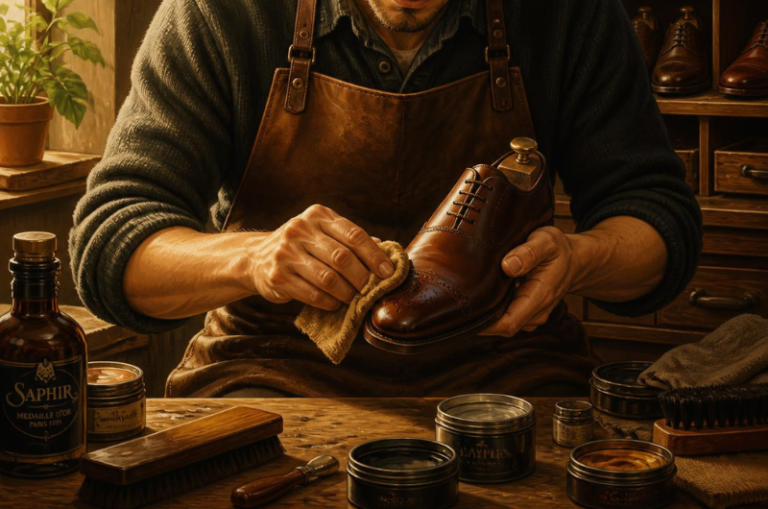
A great pair of shoes says a lot about you, but scuffed, dull leather can undo even the sharpest outfit. Knowing how to polish shoes properly is one of the simplest ways to keep your footwear looking sharp, extend its life, and save money on replacements. In this guide, we’ll walk you through exactly how to polish shoes at home, step by step, using the right tools and techniques.
Whether you’re preparing for a job interview, a wedding, or just want your everyday shoes to look their best, this guide will show you how to polish shoes the right way — and when it’s better to let a professional handle it.
Why Learning How to Polish Shoes Matters
Many people only think about shoe care when their shoes already look worn out. But learning how to polish shoes regularly does more than just improve appearance:
- It protects the leather from cracking and drying out
- It creates a barrier against water, dirt, and salt stains
- It extends the overall lifespan of your shoes
- It keeps your footwear looking professional and well-maintained
If you invest in quality shoes, learning how to polish shoes correctly is one of the best ways to protect that investment.
Our specialists provide reliable cleaning, repairs, and alterations. contact us and book today.
What You Need Before You Polish Shoes
Before we get into how to polish shoes step by step, gather these basic supplies:
- A soft-bristled shoe brush
- A horsehair buffing brush
- Shoe polish (cream or wax, matched to your shoe colour)
- A soft microfiber or cotton cloth
- A damp cloth for cleaning
- Shoe trees or crumpled paper (optional, but helpful)
Having the right tools makes the process of polishing shoes much easier and gives you a more even, professional finish.
How to Polish Shoes Step by Step
Here is the exact process professionals use when they polish shoes. Follow these steps in order for the best results.
Step 1: Clean the Shoes First
Before you can polish shoes properly, you need to remove dirt, dust, and debris from the surface. Use a damp cloth or soft brush to wipe down the entire shoe, paying close attention to the seams and sole edges. Skipping this step is one of the biggest mistakes people make when they try to polish shoes at home, as trapped dirt can scratch the leather during buffing.
Step 2: Apply Shoe Polish
Once the shoes are clean and dry, apply a small amount of polish using a soft cloth or applicator brush. Work in small, circular motions, covering the entire shoe evenly. This is the core step in how to polish shoes effectively, since an even application prevents blotchy patches and uneven shine.
Step 3: Let the Polish Sit and Then Brush
Allow the polish to sit for a few minutes so it can absorb into the leather. Then use your horsehair brush to work it in with brisk, back-and-forth strokes. This step is essential when learning how to polish shoes because brushing helps distribute the polish and starts building the shine.
Step 4: Buff for a High Shine
Finally, take a clean, soft cloth and buff the shoe in fast, gentle strokes. For an extra glossy finish, add a tiny drop of water to the cloth and continue buffing — this is the technique behind the classic “spit shine.” This final buffing stage is what truly completes the process of how to polish shoes to a mirror-like finish.
How to Polish Shoes Made of Different Materials
Not all shoes are the same, so how to polish shoes correctly depends on the material. Here’s how to approach the most common types.
How to Polish Leather Shoes
Leather is the most common material and responds best to cream or wax polish. Follow the standard steps above: clean, apply polish, brush, and buff. Leather shoes hold shine well and benefit from polishing every one to two weeks.
How to Polish Suede Shoes
Suede requires a different approach entirely. Never use regular polish on suede — instead, use a suede brush to lift dirt and restore the nap, and a suede eraser for stubborn marks. If you’re wondering how to polish shoes made from suede, the honest answer is that suede isn’t polished in the traditional sense; it’s cleaned and brushed to refresh its texture.
How to Polish Patent Leather Shoes
Patent leather already has a glossy finish, so it needs gentler care. Simply wipe with a damp cloth and use a specialised patent leather cleaner or a small amount of petroleum jelly to restore shine without damaging the coating.
Common Mistakes to Avoid When You Polish Shoes
Even with good intentions, many people get it wrong when they try to polish shoes at home. Watch out for these common errors:
- Using too much polish, which leads to a sticky, uneven finish
- Skipping the cleaning step before applying polish
- Using the wrong polish colour, which can darken or stain the leather
- Applying polish to suede or nubuck by mistake
- Not letting the polish dry before buffing
Avoiding these mistakes will make a real difference in how your shoes look after every polishing session.
How Often Should You Polish Shoes?
A common question alongside how to polish shoes is how often it should be done. As a general rule:
- Everyday work shoes: every 1–2 weeks
- Occasional dress shoes: before each significant wear
- Shoes exposed to rain or salt: clean and condition immediately after exposure
Regular care is more effective than occasional deep polishing, so building a simple routine will keep your shoes looking their best year-round.
When to Leave It to the Professionals
While knowing how to polish shoes at home is a valuable skill, some situations call for expert care — deep stains, water damage, cracked leather, or delicate designer shoes. At Elegance Dry Cleaners, our team specialises in professional shoe cleaning and restoration, using techniques that protect delicate materials while restoring that like-new shine. If your shoes need more than a quick polish, visit our blog for more care tips or get in touch with our team directly.
FAQs About How to Polish Shoes
How long does it take to polish shoes? A basic shine takes about 10–15 minutes, while a full spit shine can take 30 minutes or more.
Can I polish shoes without proper shoe polish? It’s best to use proper polish designed for your shoe material. Household substitutes like olive oil can damage leather over time.
Do black and brown shoes need different polish? Yes. Always match the polish colour to your shoe, or use a neutral polish if you’re unsure.
Final Thoughts
Learning how to polish shoes is a small habit that makes a big difference in how put-together you look and how long your footwear lasts. With the right tools, a little patience, and the steps outlined above, you can keep your shoes looking sharp between professional cleanings. And whenever your shoes need more than a home polish can offer, the team at Elegance Dry Cleaners is here to help restore them to their best condition.
Disclaimer: The information that is provided in this article is general in nature; it does not intend to disregard any of the professional advice.