
If your sofa has seen better days, you’re not alone. Between muddy paws, spilt tea and everyday wear, soft furnishings take a real battering in most British homes. Learning how to clean upholstery properly can save you hundreds of pounds in replacement furniture and keep your living room looking fresh for years to come.
In this guide, we’ll walk you through exactly how to clean upholstery step by step, including how to clean a sofa safely, effective sofa stain removal techniques, how often to clean upholstery for the best results, and what to expect if you decide to call in professional upholstery cleaning instead of doing it yourself.
Why Knowing How to Clean Upholstery Matters
Upholstered furniture is one of the biggest investments in any home, yet it’s often the most neglected when it comes to cleaning. Dust, dead skin cells, pet dander and general grime build up in the fibres of your sofas and armchairs over time, even if the fabric looks clean on the surface.
Beyond appearances, dirty upholstery can also affect air quality, particularly for households with allergy sufferers or asthma. That’s why understanding how to clean upholstery isn’t just about aesthetics — it’s about maintaining a healthier home environment too.
Whether you own a fabric sofa, a leather armchair or a set of dining chairs, the fundamentals of upholstery cleaning remain fairly similar, though the products and methods will vary slightly depending on the material.
Our specialists provide reliable cleaning, repairs, and alterations. contact us and book today.
How to Clean Upholstery: Step-by-Step
Before you reach for any cleaning product, it’s worth following a proper process. Rushing in with the wrong cleaner can permanently damage delicate fabrics, so take your time with each stage.
Check the Cleaning Code Label First
Almost every piece of upholstered furniture comes with a manufacturer’s cleaning code, usually found on a tag underneath a cushion or on the base of the item. This is the single most important step in how to clean upholstery correctly, as it tells you exactly which products are safe to use:
- W – Water-based cleaners are safe to use.
- S – Only solvent-based cleaners should be used; avoid water.
- WS – Both water-based and solvent-based cleaners are suitable.
- X – Vacuum only; no liquid cleaners of any kind. Professional cleaning is recommended.
Skipping this step is one of the most common mistakes people make, and it’s often the reason DIY attempts go wrong.
Vacuum Thoroughly Before You Start
Regardless of the fabric type, always vacuum your furniture first using an upholstery attachment. This removes loose dirt, crumbs, pet hair and dust before any liquid touches the fabric, preventing you from simply rubbing grime further into the fibres. Pay close attention to seams, crevices and underneath removable cushions, as this is where debris tends to collect.
How to Clean a Sofa Specifically
Sofas are usually the largest and most-used piece of upholstered furniture in the house, so it’s worth covering how to clean a sofa in a bit more detail.
- Remove and wash any covers if they’re machine washable, following the care label instructions.
- Vacuum the entire sofa, including the arms, back cushions and base.
- Mix a small amount of upholstery shampoo or a mild washing-up liquid with warm water, following the guidance from your cleaning code.
- Test the solution on a hidden patch, such as the underside of a cushion, and wait ten minutes to check for discolouration.
- Using a soft cloth or sponge, gently work the solution into the fabric in small circular motions, avoiding oversaturating the material.
- Wipe away excess moisture with a clean, dry towel and allow the sofa to air dry completely before use, ideally with windows open for ventilation.
Following this process is essentially the same whether you’re dealing with a two-seater or a large corner sofa, and it forms the backbone of how to clean upholstery across most furniture types in the home.
Sofa Stain Removal: Tackling Common Marks
Stains are usually what prompt people to search for how to clean upholstery in the first place, so let’s look at some of the most common culprits and how to deal with them.
Sofa Stain Removal for Wine, Tea and Food Spills
For fresh spills, speed is everything. Blot (never rub) the area immediately with a clean, dry cloth to lift as much liquid as possible before it soaks into the padding beneath. For sofa stain removal on water-safe fabrics, mix a teaspoon of washing-up liquid with warm water, dab it onto the stain with a soft cloth, then blot with a dry towel to lift the mark. Repeat as needed, working from the outside of the stain inwards to stop it spreading.
For dried-on food or tea stains, a mixture of white vinegar and water can help break down the residue before you attempt the standard cleaning method.
Sofa Stain Removal for Grease and Oil Marks
Grease stains, often from takeaway dinners on the sofa, need a slightly different approach. Sprinkle bicarbonate of soda or cornflour directly onto the mark and leave it for 15–20 minutes to absorb the oil. Vacuum away the powder, then treat any remaining residue with a small amount of upholstery-safe solvent cleaner if your fabric code allows it.
Ink, makeup and pet accidents each require their own specific treatments, so it’s always worth checking the fabric code and doing a patch test before applying anything new. If sofa stain removal at home doesn’t fully shift a mark, that’s usually a sign it’s time to consider a professional treatment.
How Often to Clean Upholstery
A common question alongside how to clean upholstery is simply how often it should be done. The answer depends on usage, but here’s a general guide:
- Vacuuming: Weekly, or fortnightly for lightly used furniture such as a spare room chair.
- Spot cleaning: As soon as spills or marks appear, rather than waiting.
- Deep cleaning: Every 6 to 12 months for households without pets or children, and every 3 to 6 months for busier homes.
- Professional deep clean: Once a year is a sensible benchmark for most families.
Knowing how often to clean upholstery in your specific household comes down to a few factors: do you have pets that shed or bring in dirt from outside? Are there young children prone to spills? Do you smoke indoors? Homes with heavier use will naturally need more frequent attention to keep fabrics looking their best and to extend the lifespan of the furniture.
Sticking to a routine also makes each individual clean easier, since dirt won’t have had months to embed itself deeply into the fibres.
DIY vs Professional Upholstery Cleaning
Once you understand the basics of how to clean upholstery yourself, you might still wonder whether it’s worth paying for professional upholstery cleaning instead. Both options have their place, depending on your furniture, your fabric type, and how much time you have.
DIY cleaning is ideal for regular maintenance, light stains and general upkeep between deeper cleans. It’s inexpensive, quick, and gives you control over the products used, which is particularly useful in households with young children or pets sensitive to strong chemicals.
However, professional upholstery cleaning becomes the better option for:
- Delicate or antique fabrics that require specialist care.
- Deep-set or old stains that DIY methods haven’t shifted.
- Fabrics marked with an “X” cleaning code, which shouldn’t be cleaned with liquids at home.
- Allergy sufferers who need a deeper clean to remove dust mites and allergens.
- Furniture that hasn’t been deep cleaned in a long time and needs restoring.
Upholstery Cleaning Cost in the UK
If you’re considering hiring help, upholstery cleaning cost varies depending on the size and type of furniture, your location, and the company you choose. As a rough guide across the UK:
- Two-seater sofa: £40–£70
- Three-seater sofa: £55–£90
- Corner sofa: £80–£140
- Armchair: £25–£45
- Dining chairs: £10–£20 per chair
These figures are approximate, and upholstery cleaning cost can rise for particularly soiled furniture, delicate fabrics like silk or velvet, or same-day callouts. It’s always worth getting a few quotes from local cleaners and checking reviews before booking, as pricing and quality can vary considerably between providers.
When to Call in Professional Upholstery Cleaning
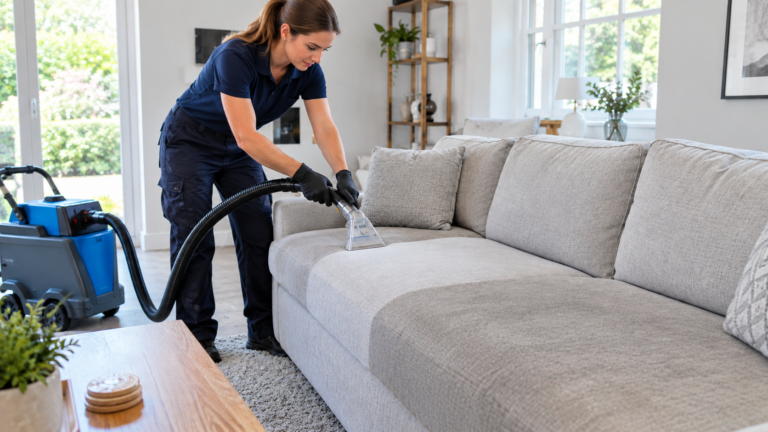
If you’ve tried the DIY steps above and stains persist, or if your furniture simply hasn’t been cleaned properly in years, professional upholstery cleaning is usually worth the investment. Professionals use hot water extraction and industrial-grade equipment that lifts embedded dirt far more effectively than home methods, often restoring furniture that seemed beyond saving.
Many companies also offer fabric protection treatments as part of the service, which can make future spills easier to manage and reduce how often you need a deep clean going forward.
Cleaning Different Upholstery Fabric Types
Not all fabrics behave the same way, and part of mastering how to clean upholstery is understanding the material you’re working with. Here’s a quick breakdown of common upholstery fabrics found in UK homes and how best to approach them.
Cotton and Linen Blends
These natural fibres are generally hard-wearing but can shrink or watermark if soaked. Stick to light dabbing with a mild solution rather than heavy scrubbing, and always allow plenty of time to air dry naturally, away from direct heat sources such as radiators.
Velvet
Velvet is a beautiful but delicate choice, and it’s easily damaged by rubbing, which can crush the pile and leave visible marks. When working out how to clean a sofa upholstered in velvet, always brush in the direction of the nap using a soft-bristled brush after any cleaning, and avoid pressing down too hard with cloths or sponges.
Leather and Faux Leather
Leather requires a different approach entirely, as standard fabric cleaners can dry out and crack the surface over time. Use a dedicated leather cleaner and conditioner, wiping in gentle circular motions, and buff with a soft, dry cloth afterwards to restore shine and suppleness.
Microfibre and Synthetic Blends
Popular for their durability and resistance to staining, microfibre sofas usually respond well to a simple mixture of water and mild detergent, or even just rubbing alcohol on a cloth for tougher marks, depending on the code label. Always work in small sections and allow each area to dry before moving on.
Whatever fabric you own, the underlying principles of how to clean upholstery remain the same: check the label, test first, and treat gently rather than aggressively.
Frequently Asked Questions About Upholstery Cleaning
Can I use a steam cleaner on my sofa?
Steam cleaning can be effective, but only on fabrics marked with a “W” or “WS” cleaning code. Always check the manufacturer’s guidance first, as excessive heat and moisture can damage certain materials or cause shrinkage.
Will baking soda damage my upholstery?
Bicarbonate of soda is generally safe on most fabrics and is a gentle, natural option for absorbing odours and lifting light grease stains. As always, patch test on a hidden area first before applying it more broadly.
How long does it take for upholstery to dry after cleaning?
Most fabrics take between 4 and 12 hours to dry fully, depending on humidity, ventilation and how much moisture was used during cleaning. Opening windows and using a fan can speed up the process considerably.
Is it worth paying for professional upholstery cleaning every year?
For most households, an annual professional clean strikes a good balance between cost and results, particularly for larger sofas that see daily use. It also helps catch early signs of wear or damage that might otherwise go unnoticed.
What’s the cheapest way to clean upholstery at home?
A simple mix of warm water and mild washing-up liquid, combined with regular vacuuming, is usually the most cost-effective approach for everyday maintenance and covers the vast majority of general grime and light stains.
How often should I clean my upholstery?
For most homes, upholstery should be vacuumed regularly and given a deeper clean every 12 to 18 months. Sofas and chairs used frequently by children or pets may benefit from more frequent professional cleaning.
Can professional upholstery cleaning remove old stains?
Professional upholstery cleaning can remove many common stains, including food, drink, grease and general dirt. However, the results depend on the type of stain, how long it has been present and the fabric being cleaned.
How can I keep my upholstery clean for longer?
Regularly vacuum your sofa, deal with spills as soon as they happen and avoid using harsh cleaning products. Rotating cushions and following the manufacturer’s care instructions can also help keep upholstery looking fresh for longer.
Common Mistakes to Avoid
Even with the best intentions, it’s easy to make small errors that undo your hard work. Here are a few pitfalls to watch out for:
- Skipping the patch test: Always test any solution on a hidden area first, as some fabrics react unpredictably to certain cleaners.
- Oversaturating the fabric: Too much liquid can seep into the cushion padding, leading to mildew or an unpleasant smell if it doesn’t dry out fully.
- Scrubbing instead of blotting: Vigorous scrubbing can push stains deeper into the fibres and damage the fabric’s texture, particularly with delicate weaves.
- Using the wrong cleaning code product: Applying a water-based cleaner to an “S” coded fabric can cause permanent watermarking or shrinkage.
- Ignoring stains until they set: The longer a spill sits, the harder sofa stain removal becomes, so always act quickly where possible.
Avoiding these common errors will make a real difference to the results you get, whether you’re doing a quick weekly tidy-up or a full seasonal deep clean.
Tips to Keep Upholstery Clean for Longer
Once you’ve given your furniture a proper clean, a few simple habits will help maintain results:
- Use throws or covers on high-traffic seating areas, especially if you have pets.
- Rotate and flip cushions regularly to distribute wear evenly.
- Keep pets off the furniture where possible, or use dedicated pet throws.
- Avoid eating directly on the sofa to reduce the risk of spills and stains.
- Air out rooms regularly to prevent musty smells building up in fabric fibres.
- Treat spills immediately rather than leaving them to dry.
These small changes make a genuine difference to how often you need to carry out a deep clean, and they help protect your investment for the long term.
Final Thoughts on How to Clean Upholstery
Learning how to clean upholstery doesn’t need to be complicated. With the right approach, a bit of patience, and the correct products for your fabric type, most everyday stains and general grime can be tackled at home. Understanding how to clean a sofa properly, knowing effective sofa stain removal techniques, and staying on top of how often to clean upholstery will keep your furniture looking its best for years.
That said, there’s no shame in calling in the professionals when a stain won’t budge or your fabric needs specialist care. Weighing up the upholstery cleaning cost against the value of restoring a much-loved sofa often makes professional upholstery cleaning a worthwhile choice, particularly for larger or more delicate pieces.
Whichever route you choose, the key takeaway is consistency. Regular vacuuming, prompt stain treatment, and periodic deep cleaning will keep your upholstery looking fresh, hygienic and comfortable for many years to come.