
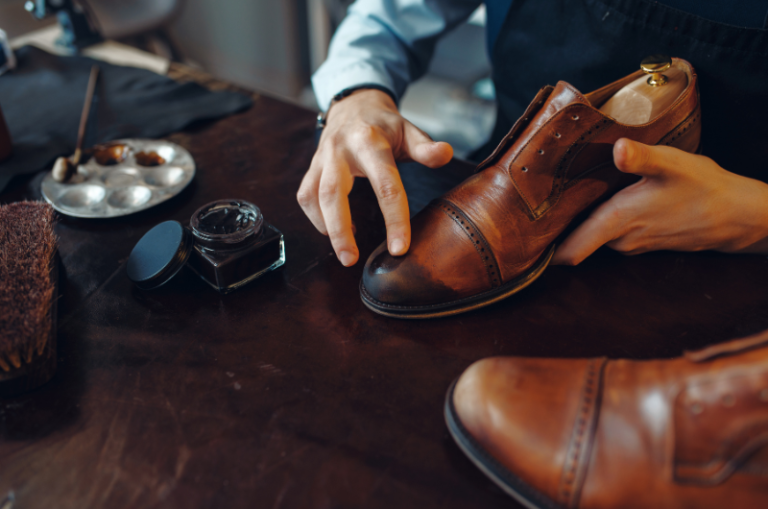
Every Londoner knows the moment. You pull on your favourite pair, head for the Tube, and halfway down the platform something feels off. The heel clicks unevenly, the sole feels thinner than it did last winter, or your sock is damp after a drizzle that never used to get through. Most of us react in one of two ways: we ignore the problem until the shoes fall apart, or we decide they are finished and buy a new pair.
Both reactions cost money. The truth is that many of the signs your shoes need repair are signs of ordinary, fixable wear, not the end of the road. A skilled cobbler can rebuild heels, fit new soles, restitch seams and bring tired leather back to life for a fraction of the price of replacing them. Repaired shoes are often more comfortable too, because they are already moulded to your feet.
In this guide we walk through seven clear warning signs, explain when to resole shoes, tackle the classic shoe repair vs replace question, and answer how long do leather shoes last in real life. We also show you how to judge a “cobbler near me” search result so you hand your shoes to someone who will treat them properly. It is written by the team at Elegance Dry Cleaners on Northcote Road, Clapham, who have spent more than 35 years looking after Londoners’ wardrobes.
Why London Is So Hard on Your Shoes
London is a walking city, whether you like it or not. A typical commute can involve a brisk walk to the station, long flights of Tube stairs, packed platforms, a bus connection and a final stretch of pavement at the other end. Add lunchtime walks, evening plans and weekend strolls across Clapham Common, along the Thames or through Battersea Park, and your shoes can easily cover thousands of steps every single day.
The city’s conditions make things worse. Pavements are hard and uneven, rain is frequent, and winter grit and standing water find every weak point in a sole or seam. Leather that is repeatedly soaked and dried out becomes stiff and prone to cracking. Heels that scrape on kerbs and escalator edges wear quickly. Even a well-made pair will show signs of ageing far sooner than it would in a country town.
The upside is that London is also full of skilled people who can fix the damage. Knowing the early signs your shoes need repair means you can act while the problem is small, cheap and quick to put right.
Our specialists provide reliable cleaning, repairs, and alterations. contact us and book today.
The 7 Signs Your Shoes Need Repair Before It Is Too Late
The seven warning signs below are listed roughly in order of how often we see them across our counter. If you recognise even one of them, it is worth booking a quick check before the problem grows.
Sign 1: The Heels Are Worn Down or Wobbling
Heels take more punishment than any other part of a shoe, which is why they are the most common reason people visit a cobbler. Stand your shoes on a flat surface and look at them from behind. If the heel is leaning to one side, if the small rubber or leather tip at the bottom has worn down to the nail or plastic core, or if you hear a metallic click on the pavement, the heel needs attention now.
Ignoring a worn heel does more than damage the shoe. A tilted heel changes how your foot lands, which over time can strain your ankles, knees and lower back. The good news is that replacing a heel tip is one of the quickest and most affordable repairs there is. Leave it until the heel block itself is gouged or crooked and the job becomes bigger. This is one of the clearest signs your shoes need repair rather than replacement, because the rest of the shoe is almost always still in perfectly good condition. Our shoe repairs service includes heel and sole replacement for exactly this reason.
Sign 2: The Soles Are Thin, Smooth or Letting in Water
Turn your shoe over. Shiny, smooth patches where the tread used to be, a thin spot forming under the ball of your foot, or a sole that bends far more easily than it once did are all red flags. Another giveaway is water: if your feet get damp on wet pavements that never bothered you before, the sole has probably worn thin enough to fail.
This is exactly when to resole shoes. The golden rule is to act before the sole wears right through to the layers underneath, because once the midsole or insole is damaged, a full resole becomes harder and sometimes impossible. Many Londoners choose a thin rubber half sole fitted over the original leather, which adds grip for slippery platforms and wet pavements and protects the leather from further wear. If you walk daily, check your soles every few months. Waiting for a hole to appear is waiting too long.
Sign 3: Cracked, Dry or Heavily Scuffed Leather
Leather is skin, and like skin it dries out. Fine cracks across the toe box or the flex point, a dull, chalky surface, or colour that has faded in patches all suggest the leather has lost its natural oils. Salt marks and water stains from a wet London winter speed up the process.
Dry leather does not just look tired. It stiffens, then splits, and a split in the upper is much harder to fix than a dry surface. Professional leather restoration cleans the surface, feeds the leather, treats scuffs and restores colour so it becomes soft, supple and glossy again. If you catch the problem while the leather is merely dry, a good clean and condition is often all it takes. Once deep cracks appear, repair is still possible in many cases, but earlier is always better.
Sign 4: Split Seams and Loose Stitching
Run your finger along the seams, especially around the toe, the heel and where the upper meets the sole. Loose threads, small gaps or stitching that has started to fray are early warnings. Left alone, one broken stitch quickly becomes a long split, and a long split can allow water and dirt into the shoe or let the upper pull away completely.
Restitching is a small job when it is done early. It is also one of the most obvious examples of the shoe repair vs replace logic: a few minutes of skilled stitching can save a pair that would otherwise be thrown away over a problem that cost almost nothing to start with. Boots, loafers and trainers all benefit, and so do handbags and belts, which our team also repairs through our wider repairs and alterations service.
Sign 5: Soles Peeling Away or Gaps Around the Welt
If the front of the sole is lifting like a flapping mouth, if there is a visible gap where the sole meets the upper, or if you notice grit and moisture working their way in, the bond has failed. This usually happens when glue ages, when shoes are stored somewhere hot or damp, or when they have been soaked and dried too quickly.
Many people assume a separating sole is a death sentence. It is not. In most cases the sole can be cleaned, reglued and in some cases restitched, which returns the shoe to a solid, waterproof state. The key is not to keep walking on it. Every step on a loose sole stretches the upper and cracks the glue line further. If you spot this early, the repair is fast. If you leave it, you may find the upper has distorted and the fix is more involved.
Sign 6: Broken Zips, Straps or Buckles
A boot with a stuck zip or a sandal with a snapped strap often gets pushed to the back of the wardrobe and forgotten. That is a waste, because these are among the easiest problems to solve. Zips can be replaced or repaired, straps can be re-attached or renewed, and buckles and fastenings can be refitted so the shoe is fully functional again.
This is especially worth remembering with ankle boots and knee-high boots, which are expensive to replace and which people often wear for years. A faulty fastening is a tiny part of the shoe, yet it makes the whole pair unwearable. If your favourite boots are in the “I will deal with it later” pile, now is the time. It is one of the least dramatic signs your shoes need repair, but it is also one of the most satisfying fixes.
Sign 7: Uneven Wear or Shoes That Have Simply Stopped Feeling Right
Sometimes the signs are not on the surface at all. A sole worn heavily on the outer edge, a heel that wears down faster on one side, a flattened or torn insole, or shoes that suddenly feel hard, slippery or unsupportive all point to something that needs correcting. The shoe may have lost its internal structure, or your foot may be sliding because the footbed has collapsed.
A cobbler can fit new insoles, replace worn linings, rebuild a heel to the correct angle or stretch tight shoes so they stop rubbing. If a pair that once felt like a glove now gives you sore heels, aching arches or blisters, do not assume your feet have changed. Check the shoes first. Comfort problems are among the most overlooked reasons to book a repair.
Shoe Repair vs Replace: How to Decide
Once you have spotted a problem, the practical question is whether the shoe is worth saving. The shoe repair vs replace decision comes down to five simple checks.
- Quality of the shoe. Well-made leather shoes with stitched soles are designed to be repaired several times. Cheap shoes with glued, moulded soles are far less forgiving and may not be worth the cost.
- Condition of the upper. If the leather above the sole is sound, repairing is nearly always worthwhile. If it is badly split, mouldy or collapsed, replacement becomes more likely.
- Cost against a new pair. A common rule of thumb is that a repair is good value when it costs well under half the price of a comparable new pair. For quality shoes the figure is usually much lower than that.
- Sentimental or practical value. A pair that is perfectly broken in, that fits your awkward feet, or that was a gift or milestone purchase often deserves repair regardless of the price tag.
- Environmental impact. Throwing out a pair of shoes that could have lasted several more years is wasteful. Repair keeps footwear out of landfill and reduces demand for new manufacturing.
As a general guide, repair almost always wins for leather shoes, boots, heels and good-quality trainers where the damage is limited to the sole, heel, stitching, zip or surface. Replacement makes sense when the structure has collapsed, the upper has split in several places, or the shoes were never well made. If you are unsure, the honest answer is to ask a professional. At Elegance Dry Cleaners we will always tell you upfront whether a repair is worthwhile, and we never charge for work we have not carried out.
How Long Do Leather Shoes Last? Realistic Lifespans
People often ask how long do leather shoes last, and the honest answer is that it depends on three things: how well they are made, how often you wear them and how well you look after them.
A quality pair of leather shoes with a stitched sole, worn a couple of times a week and cared for properly, can last many years and often a decade or more. Because the sole can be replaced several times, the upper can outlive multiple sets of soles. Entry-level leather shoes with glued soles typically last a few years of regular wear. Fashion shoes and fast-fashion footwear are usually shorter-lived, and a daily commute on rough London pavements will shorten any lifespan.
Rotation matters more than most people realise. Wearing the same pair every day gives leather no chance to dry out between wears, and damp leather breaks down much faster. Alternating between two or three pairs can nearly double the working life of each. Using shoe trees to hold their shape, polishing regularly and fixing small problems promptly all add years.
The soles are usually the first part to go. As a rough guide, shoes worn daily may need new heel tips every few months and a resole after a year or two, while shoes worn occasionally might go several years between visits. That is why knowing when to resole shoes is so valuable: it turns a short-lived pair into a long-term investment.
Finding a Reliable Cobbler Near Me in London
Typing “cobbler near me” into a search bar will give you plenty of results, but not every cobbler is equal. A few things are worth looking for.
- Honest assessments. A good cobbler examines your shoes in front of you and tells you what is worth fixing and what is not.
- Clear pricing. You should know the cost before any work begins, with no surprises when you collect.
- Experience across materials. Leather, suede, trainers, heels and boots all behave differently and need different techniques.
- Reasonable turnaround. Most standard repairs are finished within two to six days, though specialist work can take a little longer.
- Genuine local reputation. Look for consistent reviews and a shop that has been part of its community for years.
Elegance Dry Cleaners has been a trusted name for Clapham and South London for over 35 years. Our shoe repairs cover heel and sole replacement, leather restoration, zip and seam repair and general refurbishment for formal shoes, boots, heels, sandals and trainers. We also handle the rest of your wardrobe under one roof, from dry cleaning to suit alterations, so you can have your suit tailored and your shoes restored in the same visit.
We are based at 180 Northcote Road, SW11 6RE, and serve customers across the surrounding neighbourhoods, including Battersea, Wandsworth, Fulham and Tooting Bec. You can see all our areas we cover and our full list of services online. If you are searching for a cobbler near me that offers honest advice and careful craftsmanship, we would be glad to help.
Prevent Future Signs Your Shoes Need Repair: Care Habits That Work
Repair is brilliant, but prevention keeps your shoes in better shape for longer and reduces how often you need a cobbler. These habits make a real difference.
- Rotate your pairs. Give each pair at least a day to dry and rest between wears.
- Use shoe trees. Cedar shoe trees absorb moisture and keep the shape of leather shoes, preventing deep creasing and curling toes.
- Clean and condition regularly. Wipe off dirt and salt after wet days, and apply a good leather conditioner every few weeks to stop the leather from drying out.
- Dry them gently. Never place wet shoes on a radiator or next to a heater. Stuff them with paper, leave them at room temperature and let them dry slowly.
- Protect the soles early. Adding a thin rubber protector or replacing heel tips before they wear down is far cheaper than a full rebuild.
- Store them properly. Keep shoes somewhere cool, dry and ventilated rather than in a damp cupboard or a hot hallway.
- Treat your whole wardrobe with the same care. Shoes, coats and tailoring wear out for similar reasons: moisture, friction and neglect. A professional approach to all three keeps everything lasting longer.
Build these into your routine and the signs your shoes need repair will arrive far less often and far more gently.
Frequently Asked Questions
What are the first signs your shoes need repair?
The earliest signs are usually small and easy to miss: a heel tip that has worn smooth, a thin patch on the sole, dry or creased leather, a loose thread, or shoes that feel slightly less comfortable than before. Spotting these early keeps repairs simple and affordable.
Is shoe repair vs replace cheaper in the long run?
For good-quality shoes, repair is almost always cheaper. A resole or heel rebuild costs far less than a new pair and extends the life of shoes you already know fit well. For very cheap shoes with glued soles, replacement can sometimes make more sense.
How often should I resole my shoes?
There is no fixed schedule because it depends on how often you walk and what surfaces you cover. A good habit is to check the soles every few months and book a resole as soon as the tread is smooth or you can feel the sole thinning. Acting before it wears through is the key.
Can all types of shoes be repaired?
Most leather shoes, boots, heels, sandals and many trainers can be repaired. The method depends on the construction and the material, which is why a professional assessment is worth having before you decide to throw a pair away.
How long does a shoe repair take?
Most standard repairs take around two to six days. More complex jobs or specialist materials may take a little longer, and we will let you know at drop-off.
Final Thoughts: Repair First, Replace Later
Shoes rarely fail overnight. They give warning through worn heels, thin soles, dry leather, loose stitching, peeling soles, broken fastenings and uneven wear. Learning the signs your shoes need repair means you can step in while the fix is small, cheap and quick, and keep the pairs you love on your feet for years rather than months.
Remember when to resole shoes, weigh up the shoe repair vs replace question honestly, and give your best leather pairs the care that lets them reach their full lifespan. If you are ready to give yours a second life, bring them to the team at Elegance Dry Cleaners. Call us on 020 7738 2266, contact us to ask a question, or get a quote today. Our shoe repairs page has everything you need to get started.