
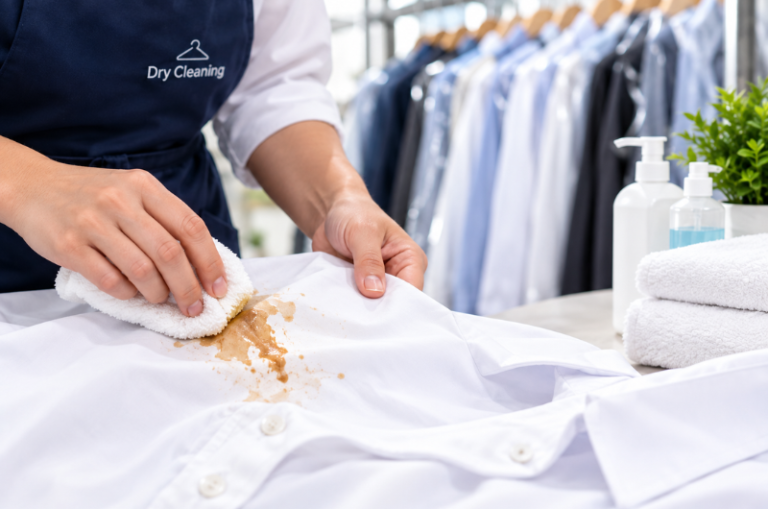
Stains happen. A splash of red wine at dinner, a coffee spill on the commute, an ink mark from a pen that’s leaked in your jacket pocket — it’s only a matter of time before something ends up on your favourite garment. So when it does, the question on everyone’s mind is simple: does dry cleaning remove stains?
The short answer is yes — in most cases, dry cleaning removes stains far more effectively than washing at home. But the full answer is a little more detailed, because not every stain behaves the same way, and not every fabric can be treated in the same manner. At Elegance Dry Cleaners in Clapham, we’re asked “does dry cleaning remove stains?” almost every day, so we’ve put together this in-depth guide to explain exactly how it works, which stains respond best, and what to do when a mark just won’t budge.
If you’re new to the process altogether, it’s worth reading our guide on what is dry cleaning first, as it explains the basics before we get into stain removal specifically.
Our specialists provide reliable cleaning, repairs, and alterations. contact us and book today.
What Happens When You Ask “Does Dry Cleaning Remove Stains?”
Before we get into specific stain types, it helps to understand why dry cleaning works differently to a normal wash. Traditional washing relies on water, detergent and agitation — rubbing, scrubbing and spinning the fabric to loosen dirt. That approach works well for everyday grime, but it can be harsh on delicate fibres, and it isn’t always effective against oil-based or set-in marks.
Dry cleaning uses a solvent instead of water (most commonly perchloroethylene, or a gentler modern alternative), combined with specialist pre-treatment techniques. Because the process doesn’t rely on water and heavy agitation, it’s gentler on fabric while still being highly effective at breaking down stubborn stains. This is really at the heart of why the answer to does dry cleaning remove stains is usually yes — the solvents are specifically suited to dissolving the type of marks that water struggles with, particularly anything oil-based.
Trained technicians also play a big role. Before any garment goes near a machine, a professional assesses the fabric, the stain, and how long it’s been there, then chooses the right pre-treatment. This combination of the right chemistry and human expertise is what separates a professional dry clean from a DIY stain-removal attempt at the kitchen sink.
Need Expert Help With a Stubborn Stain? Our specialists provide reliable cleaning, repairs and alterations across Clapham. Contact Us Now | Or request a free quote
Types of Stains Dry Cleaning Can Remove
So, does dry cleaning remove stains from every source? Not quite every single one, but it does an excellent job with the categories below, which cover the vast majority of marks we see come through our doors.
Oil and Grease Stains
Butter, salad dressing, cooking oil, engine grease — these are some of the trickiest stains to shift at home because oil repels water rather than dissolving in it. That’s exactly where dry cleaning solvents shine. Because the solvent is oil-based rather than water-based, it binds to the grease and lifts it cleanly away from the fibres without leaving the ring or smear that often results from a home attempt.
Ink Stains
Pen leaks and highlighter smudges are a nightmare on shirts, blazers and school uniforms alike. Ink is notoriously stubborn because it sets into fabric quickly, especially on natural fibres like cotton, linen and wool. Professional cleaners use targeted spotting agents that break the ink down before the solvent wash, and the sooner the garment is brought in, the better the results — ink that’s been left to dry for weeks is considerably harder to shift.
Coffee, Tea and Wine Stains
Tannin-based stains from tea, coffee and red wine are a classic party disaster. Home remedies like salt or soda water might lighten the mark, but they rarely remove it completely. Professional treatment usually combines gentle heat with specific chemical agents that target the tannin pigment directly, which is why a garment that looked ruined after a spilt glass of Merlot can often come back looking as good as new.
Protein-Based Stains (Blood, Sweat and Dairy)
Blood, sweat, milk and other protein-based marks need particularly careful handling, because heat can actually set them permanently rather than remove them. This is one area where dry cleaning genuinely outperforms a hot home wash. Technicians use enzyme-based treatments to break the proteins down at a low temperature before the garment ever reaches the solvent stage, which is the safest way to lift these stains without locking them in.
Makeup and Personal Care Stains
Foundation, deodorant marks and perfume residue show up regularly on shirt collars, blouses and evening wear. Because these products usually contain a mix of oils, alcohol and pigment, they need a combined approach — spot treatment followed by a full solvent clean. This is also the safest method for delicate items like silk or fur trims, where scrubbing at home could easily cause damage.
Does Dry Cleaning Remove Stains From Every Fabric Equally?
Not entirely — fabric type plays a big role in the outcome. Sturdier fabrics like cotton, polyester and most wools generally respond very well, and technicians can use slightly stronger treatments if needed. Delicate fabrics such as silk, cashmere, and anything with beading, sequins or a special finish require a much gentler touch, so the process may take longer or need repeat treatment to achieve the same result.
This is one of the main reasons the honest answer to does dry cleaning remove stains is “usually, but it depends” rather than a flat yes in every case. A skilled dry cleaner will always tell you upfront if a fabric limits what can realistically be achieved, rather than promising a result they can’t guarantee.
It’s also worth remembering that colour-fastness matters. A stain treatment that’s perfectly safe on a sturdy navy suit could cause fading on a pale, delicate blouse, which is another reason professional assessment matters more than a generic home remedy found online.
Stains That Dry Cleaning Cannot Always Remove
While dry cleaning is remarkably effective, it isn’t magic, and it’s worth being realistic about its limits. A few situations where results can be limited:
- Very old, set-in stains — the longer a stain sits, the more it bonds with the fibres of the fabric, and past a certain point some pigment may remain permanently.
- Stains that have already been through a hot tumble dryer — heat can “cook” certain stains into the fabric, making them far harder to shift afterwards.
- Certain synthetic dyes — some coloured stains (particularly from dyes, certain inks, or bleach damage) can cause discolouration that no amount of solvent will fully reverse.
- Stains on very delicate or already-worn fabric — if a strong treatment risks damaging the garment more than the stain itself, a good cleaner will recommend a gentler, partial treatment instead.
If your dry cleaner tells you a stain can’t be fully removed, it isn’t a lack of effort — it’s usually an honest assessment based on how the fibres and the stain have interacted over time. A reputable cleaner will always explain this rather than attempt an aggressive treatment that risks the garment altogether.
Does Dry Cleaning Remove Stains Better Than Washing at Home?
In most cases, yes. Home washing machines rely on water, detergent and mechanical agitation, which works reasonably well for general dirt but struggles with oil-based, protein-based and tannin stains — the very categories where dry cleaning removes stains most reliably. Attempting to treat a tough stain at home can also backfire: rubbing too hard can damage delicate fibres, and using the wrong product (or hot water) on the wrong stain can set it permanently rather than lift it.
That said, home washing still has its place for everyday laundry, and dry cleaning isn’t necessary for every garment. The best approach is knowing which stains and fabrics genuinely need professional attention — as a rule of thumb, anything oil-based, anything on a delicate or structured garment (suits, blazers, evening wear), and anything that’s already had a go at being removed at home and failed, is worth bringing to a professional.
How Our Elegance Dry Cleaners Experts Tackle Stains
We follow a consistent, careful process on every garment that comes through our doors, which is part of why the answer to does dry cleaning remove stains is such a confident yes when it comes to our own service.
1. Initial stain identification Our technicians examine the colour, texture and location of the mark to work out what caused it — oil, tannin, protein, dye or something else — and choose the right treatment accordingly.
2. Targeted pre-treatment A specific spotting agent is applied directly to the stain to loosen it before the garment goes anywhere near the main cleaning cycle. This step alone accounts for a huge amount of the overall stain-removal success rate.
3. Solvent wash The garment is then cleaned using our solvent system, which lifts away both the everyday dirt and the pre-treated stain without the need for water or harsh scrubbing.
4. Finishing and inspection Once cleaned, every item is steam-pressed, reshaped and inspected by hand. If a stain needs a second round of treatment, we’ll always let you know before proceeding rather than guessing.
What sets us apart:
- Modern, safer solvent systems that are gentler on both fabric and the environment
- Technicians trained specifically in fabric science and spot treatment
- Convenient pick-up and delivery options to fit around your schedule
Get Expert Help for All Your Cleaning and Alteration Needs Our specialists provide reliable cleaning, repairs and alterations. Contact us and book today. Contact Us Now | Or request a free quote
Tips to Help Dry Cleaning Remove Stains More Effectively
A few small habits can make a real difference to your results:
- Act quickly. The sooner a stained item reaches your dry cleaner, the higher the chance of full removal.
- Don’t try to treat it yourself first. Home remedies (salt, soda water, stain pens) can sometimes make things worse or set the stain before a professional even sees it.
- Point out the stain and explain what caused it. Knowing whether a mark is wine, oil or ink helps the technician choose the right treatment straight away.
- Avoid the tumble dryer. Never dry a stained item in a hot dryer before it’s been professionally treated, as heat can make stains permanent.
- Be upfront about fabric care labels. If you know a garment is delicate or dry-clean only, mention it — it changes how aggressively a stain can be treated.
- Bring the whole outfit if unsure. If you’re not certain what caused a mark, bringing along anything it may have come into contact with can help a technician identify it faster.
Following these steps won’t guarantee every single stain disappears, but it significantly improves the odds, and it’s the single biggest factor within your control.
FAQs: Does Dry Cleaning Remove Stains?
Does dry cleaning remove stains completely every time? Not always. Fresh stains on sturdy fabrics are usually removed completely, but very old or set-in stains, or marks on delicate fabric, may only fade rather than disappear entirely.
How long does it take for dry cleaning to remove stains? Most garments are ready within 24–48 hours, though particularly stubborn stains may need a second treatment, which can add extra time.
Can dry cleaning remove old, dried-in stains? Sometimes, but success rates drop the longer a stain has been left. It’s always worth bringing an item in as soon as possible rather than waiting.
Is dry cleaning safe for all fabrics? Most fabrics tolerate dry cleaning very well, but delicate materials like silk, cashmere or anything with special trims require a gentler approach and may take longer to treat.
Should I try to remove a stain myself before dry cleaning? It’s generally best not to. Home treatments can set certain stains permanently, particularly if heat or rubbing is involved. Leave the stain as it is and bring it in as soon as you can.
Does dry cleaning remove stains from carpets and upholstery too? Yes, though this uses a different process to garment dry cleaning. If you’re dealing with a stained carpet or rug rather than clothing, take a look at our dedicated carpet cleaning and rug cleaning services.
Conclusion
Yes — in the vast majority of cases, dry cleaning removes stains that a home wash simply can’t touch, from oil and grease to red wine, ink, and protein-based marks like blood or sweat. It isn’t a guarantee for every single stain on every single fabric, but with the right expertise, professional-grade solvents, and a bit of urgency on your part, most stains stand an excellent chance of coming out completely.
At Elegance Dry Cleaners, we treat every garment individually, and we’re always upfront with you about what’s realistically achievable before we start any treatment. If you’ve got a stained shirt, suit, dress or coat sitting in your wardrobe, don’t let it linger — book a collection or drop by today and let our team show you exactly why dry cleaning remains one of the most reliable ways to bring your clothes back to life.
Disclaimer: The information that is provided in this article is general in nature; it does not intend to disregard any professional advice.