
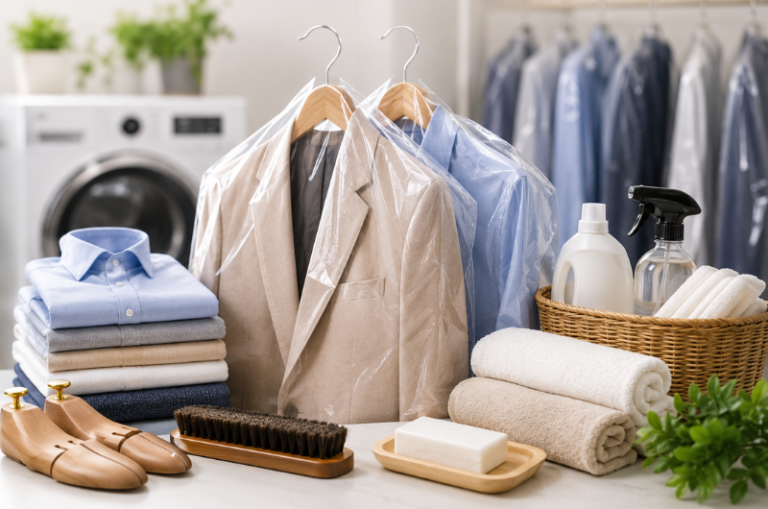
Dry cleaning is a professional cleaning process that uses a liquid chemical solvent instead of water to clean fabrics. The “dry” refers to the fact that no water is involved — which is the whole point. Water causes problems for certain fabrics: it shrinks wool fibres, causes silk to lose its lustre, makes structured garments lose their shape, and can cause colours to bleed. A solvent dissolves and lifts away grease, oils, and dirt without any of those water-related risks.
From 35 Years Experience “The most common misunderstanding I see is people thinking ‘dry clean only’ means the garment is delicate or fragile. Sometimes it does — but often it simply means the fabric will be permanently damaged by water, full stop. A beautifully structured wool suit isn’t fragile, but put it through a washing machine and you’ll ruin it in one cycle. That’s exactly the kind of thing we’re here for.”
The solvent most commonly used in professional dry cleaning is called perchloroethylene (PERC), though many modern cleaners — including us — use newer hydrocarbon-based or silicone-based solvents that are gentler on fabrics and better for the environment. The solvent dissolves fats and oils extremely well, which is why dry cleaning outperforms home washing for most everyday contamination.
Our specialists provide reliable cleaning, repairs, and alterations. contact us and book today.
How the Process Works, Step by Step
Here’s exactly what happens from the moment you drop your garment off at Elegance Dry Cleaners to the moment you collect it.
Inspection & Tagging
Every item is checked before we do anything. We look for existing stains, damage, loose buttons, weak seams — anything that needs flagging. Each garment gets a unique tag so it stays tracked through the entire process and comes back to the right person without fail. We also check care labels for fibre content and any restrictions.
Pre-Treatment of Stains
Stains are treated individually before the main cleaning cycle. Different stains need different chemistry — a wine stain, an oil stain, and an ink mark all behave very differently in a solvent bath. We apply the right pre-treatment agent to each mark and work it in by hand before the garment goes anywhere near the machine. This step is where most of the skill sits.
The Cleaning Cycle
The garment goes into a dry cleaning machine — which looks, roughly, like a large front-loading drum. Solvent is pumped in, and the drum rotates gently to agitate the fabric and work the solvent through the fibres. The solvent dissolves oils, grease, and most organic contaminants as it moves through the fabric. The cycle typically runs between 25 and 45 minutes depending on the load and garment type.
Solvent Extraction & Drying
The solvent is pumped out and recovered — professional dry cleaning machines are closed-loop systems, meaning the solvent is filtered and recycled, not just drained. The drum then spins at high speed to remove the residual liquid, and warm air is circulated to dry the garments completely. The temperature is carefully controlled — too hot and delicate fabrics can be damaged.
Post-Spotting
After the machine cycle, garments are inspected again under good light. Any marks that survived the main clean get treated again by hand — this is called post-spotting. Stubborn stains like set-in wine, dye transfers, or old perspiration marks sometimes need two or three targeted treatments before they fully lift. We’ll tell you honestly if something isn’t going to come out completely.
Pressing & Finishing
Once clean and dry, garments are pressed and finished by hand. A suit gets its lapels, chest and back pressed perfectly flat. A dress gets steamed to restore its drape. This is where the professional result really shows — a properly finished garment looks sharper and sits better than anything you can achieve at home with a household iron.
Packaging & Collection
Finished garments are hung or folded, covered in a protective bag, and prepared for collection or delivery. The tag is removed, the order is checked against the original intake form, and everything is ready. Same-day orders placed with us before 10am are ready by 5pm — we’ve had 35 years of practice running that schedule.
Dry Cleaning vs. Machine Washing When to Use Which
A lot of people over-dry-clean (bringing us things that would wash perfectly fine) and a lot of people under-dry-clean (putting things through the washing machine that we then see ruined beyond repair). Here’s a genuinely honest guide.
| Factor | Dry Cleaning | Machine Washing |
|---|---|---|
| Best for | Wool, silk, cashmere, structured garments, suits, evening wear | Cotton, linen, polyester, everyday clothes, bedding |
| Shrinkage risk | None — solvent doesn’t swell fibres | High for natural fibres, especially wool |
| Shape retention | Excellent — gentle agitation, no wringing | Poor for structured items (jackets, tailored pieces) |
| Stain removal (oil) | Excellent — solvent dissolves oils completely | Limited — water doesn’t dissolve oil-based marks |
| Colour safety | Very safe — no bleeding or fading | Risk of bleeding, especially with bright dyes |
| Cost | Higher per item | Very low |
| Convenience | Drop-off/collection service available | At-home, immediate |
| Pressing/finish | Professional finish included | Requires ironing at home |
Practical Tip
If your garment is labelled “dry clean only,” that’s not a suggestion — it’s a warning. But if the label says “dry clean recommended,” you often have more flexibility. When in doubt, bring it in and ask us. We’ll tell you honestly whether home washing is a reasonable option for that particular piece.
Which Fabrics Actually Need Dry Cleaning
Not all “dry clean only” labels are equal. Here’s a breakdown of the main fabrics we handle every day at Elegance, and why each one needs specialist care.
Wool
Wool fibres have microscopic scales that interlock when exposed to water and agitation — causing irreversible shrinkage and felting. Even “machine-washable wool” should be handled with extreme care. We clean everything from lightweight summer wool to heavy overcoats.
Silk
Silk loses its lustre, texture, and shape when washed in water. It’s also extremely sensitive to alkaline detergents. The solvent process preserves the natural sheen and drape of silk perfectly. We clean a lot of silk blouses and scarves for London professionals.
Cashmere
Cashmere is essentially fine wool — the same risks apply, but more so. A cashmere jumper that shrinks is not fixable. We handle cashmere at a cooler cycle with gentler agitation and a specific solvent formulation.
Tailored Suits
A structured suit isn’t just fabric — it’s canvas interfacing, shoulder padding, and careful tailoring. Water collapses all of that. We clean hundreds of business suits every month from clients across Clapham, Wandsworth, and the City.
Beaded / Embellished
Beading and embroidery are attached with glues and threads that dissolve in water. Wedding dresses and evening gowns with heavy embellishment should never go near a washing machine. This is one of the most common rescues we do.
Curtains & Drapes
Curtains often mix fabrics (lining, interlining, outer face) that react differently to water — causing them to pucker, shrink unevenly, or lose their hang. We also take them down, clean them, and re-hang them as part of our home furnishing service.
Does Dry Cleaning Remove Stains?
Yes — but not all stains, and not always completely. Here’s the honest answer.
Dry cleaning is extremely effective at removing oil-based stains: cooking grease, salad dressing, body oils, make-up, lipstick, most food fats. The solvent dissolves these almost completely in the pre-treatment and main clean cycle.
Water-soluble stains — tea, coffee, wine, fruit juice, sweat — are trickier. They require aqueous (water-based) spotting agents applied by hand before the solvent cycle. A skilled cleaner knows which agent to use for which stain, and in what order. Get that wrong, and you can set a stain permanently rather than removing it.
“The single most important factor in stain removal isn’t the cleaning process — it’s time. A fresh wine stain brought to us the morning after a dinner party has an 85–90% chance of coming out completely. The same stain, two weeks later, after it’s been heat-dried in a tumble dryer? Much lower. If you’ve got a serious stain, bring it to us as quickly as possible — even if you’re not sure we can help.”— Habib, Owner, Elegance Dry Cleaners
Some stains are genuinely permanent regardless of what we do: certain bleach marks (they’ve chemically altered the dye, not just deposited a mark), very old set-in stains, and some dye transfers from other garments. We’ll always be upfront with you if that’s the case before you spend money on a clean.
What Dry Cleaning Costs in London (2026)
Prices vary across London, but here’s an honest guide to what you can expect to pay at a quality independent cleaner like us in South London, as of 2026. We keep our prices fair — we’ve been serving Clapham residents for 35 years and we’d rather have your repeat business than overcharge you once.
| Item | Our Price | Typical London Range |
|---|---|---|
| Suit (2-piece) | £14–£18 | £12–£25 |
| Suit (3-piece) | £18–£22 | £16–£30 |
| Ladies dress (standard) | £12–£16 | £10–£22 |
| Evening gown/wedding dress | £55–£120 | £50–£150+ |
| Wool coat/overcoat | £18–£24 | £16–£30 |
| Silk blouse/shirt | £9–£14 | £8–£18 |
| Trousers (pressed) | £7–£10 | £6–£14 |
| Duvet (double) | £22–£28 | £18–£35 |
| Curtains (per pair) | £35–£60 | £30–£80 |
| Cashmere jumper | £11–£15 | £10–£20 |
💡 Same-Day ServiceDrop off before 10 am and collect by 5 pm — Monday to Friday, and until 6 pm on Saturday. Same-day is included at no extra charge for most garments. There’s no premium for urgency here.
How Often Should You Dry Clean?
This is one of the questions we get most often — and honestly, most people over-clean their garments. More cleaning means more wear on the fabric over time. Here’s our general guidance after 35 years:
- Wool suits: Once or twice a season (2–3 times a year) unless visibly soiled. In between cleans, a good brush and airing on a wooden hanger does most of the work. Trousers, which take more wear, can be pressed alone between full cleans.
- Cashmere & wool jumpers: Every 3–5 wears, or at end of season before storage. Over-cleaning cashmere wears the fibres down.
- Evening wear & occasionwear: After each wear. Body oils and perfume residue are invisible when fresh but can cause irreversible yellowing if left in the fabric.
- Wedding dress: As soon as possible after the event — ideally within a week. Champagne and food stains that look mild can oxidise over time and become permanent.
- Curtains & drapes: Every 12–18 months in a typical London home. More frequently if you have pets, open fires, or high traffic near the windows.
- Overcoats: Once at the end of the winter season. A coat that goes into storage unwashed can come out with set stains and a musty odour.
Simple Rule:
Don’t dry clean on a schedule — dry clean when it needs it, or at seasonal transitions. If you can smell the garment, see a mark, or it’s going into long-term storage, it’s time. If it just looks a little worn, brush it, air it, and steam it — no need to put it through a chemical process unnecessarily.
Common Questions — Answered Straight
Can I dry clean at home?
Home dry cleaning kits (the ones you put in a tumble dryer) are more accurately described as “refreshing” products — they remove light odours and give a slight freshening, but they don’t clean the fabric. They contain no solvent and won’t remove oil stains, grease, or ground-in marks. For anything with a real stain, or a garment you genuinely care about, they’re not a substitute for professional cleaning.
Is dry cleaning bad for clothes long-term?
Professional dry cleaning done well is very gentle on fabrics — far gentler than machine washing. The solvents we use are designed to dissolve contaminants, not the fabric itself. Over many years and many cleans, any cleaning process will gradually reduce fabric life, but used at appropriate frequency, professional dry cleaning extends garment life rather than shortening it.
Do dry cleaners wash clothes with water at all?
In the main solvent cycle, no. However, during stain pre-treatment and post-spotting, we do use small amounts of water-based spotting agents for specific stain types. Some garments that are labelled “dry clean” can also be “wet cleaned” — a specialist process using water with very controlled temperatures, agitation, and specially formulated detergents. We offer wet cleaning where it’s a better option for the garment.
What if a stain doesn’t come out completely?
We’ll tell you before you collect. If we can see after post-spotting that a stain hasn’t fully lifted, we’ll call or note it on the garment so you’re not surprised. In some cases we can attempt a second treatment. We don’t charge extra for the attempt, and we’ll never tell you a stain is gone if it isn’t.
How long does dry cleaning take?
Our standard turnaround is 24–48 hours. Same-day is available for most garments if you drop off before 10am — ready by 5pm (6pm Saturdays). More complex items — heavily embellished gowns, multiple-piece suits with alterations, curtains — may take 2–3 days. We’ll give you a specific date at drop-off.
Do you offer collection and delivery in Clapham?
Yes. We collect and deliver across Clapham, Wandsworth, Battersea, Fulham, and surrounding South London postcodes. Give us a call on 020 7738 2266 or drop us an email to arrange a convenient time. We work around your schedule.
Conclusion
So, what is dry cleaning, really? It’s a specialised, solvent-based cleaning process designed to protect delicate and structured garments in ways that ordinary washing simply can’t. From suits and wedding gowns to wool coats and curtains, understanding how dry cleaning works inspection, pre-spotting, solvent cleaning, and expert finishing shows exactly why it remains the trusted choice for garment care over a century after it was first developed.
At Elegance Dry Cleaners, we combine this proven process with eco-conscious solvents and expert finishing to make sure your clothes come back looking their best, every time. If you have a garment that needs professional care, get in touch with our team or request a free quote today.