
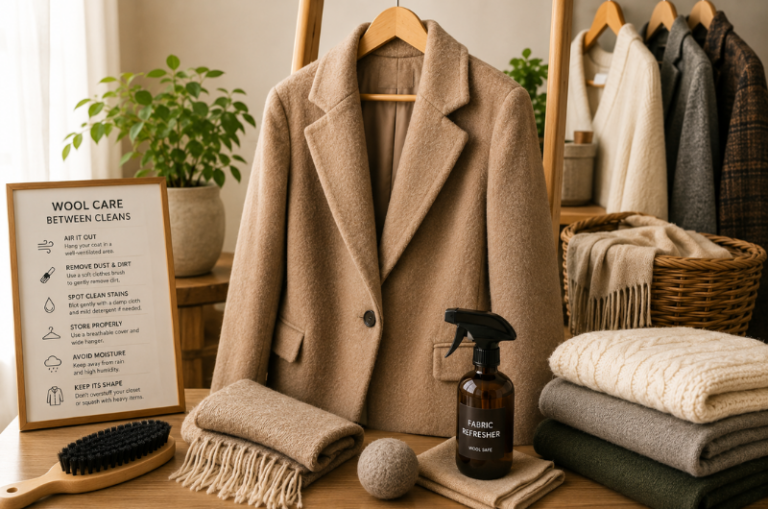
A good wool coat can last a decade or more, but only if you know how to care for wool coats between cleans, not just when you drop them off at the dry cleaner. Most of the damage wool suffers happens quietly, between visits: crushed fibres from careless hanging, moisture trapped in a closet, or a stain left to set for weeks. This guide walks you through exactly how to care for wool coats between cleans, from daily habits to long-term storage, so your coat stays fresh, shaped, and odour-free all season.
What Does It Mean to Care for Wool Coats Between Cleans?
Caring for wool coats between cleans simply means the small, regular maintenance steps you take on the days and weeks when the coat isn’t at the dry cleaner. Wool is a natural, resilient fibre; it resists wrinkles and sheds light dirt on its own, but it isn’t maintenance-free. Learning how to care for wool coats between cleans means understanding three things:
- How wool fibres respond to moisture, friction, and heat
- Which everyday habits protect the coat’s shape and colour
- When a stain needs immediate attention versus when it can wait for a professional clean
Dry cleaning removes deep-set soil and refreshes the fabric, but it isn’t designed to happen every week. That’s where between-clean care fills the gap.
Why Knowing How to Care for Wool Coats Between Cleans Matters
Wool coats are a significant investment — a quality coat typically costs several hundred pounds, and how you treat it between cleans has a direct effect on both its appearance and its lifespan.
The Real Cost of Skipping Between-Clean Care
Neglecting a wool coat between cleans doesn’t just make it look tired. It can lead to:
- Permanent shine or flattening on the fibres from repeated crushing in a tightly packed wardrobe
- Set-in stains that require aggressive treatment or never fully lift
- Moth damage, since wool’s natural fibres are a food source for larvae if the coat isn’t aired and stored correctly
- Odour retention, particularly smoke, food, and perspiration smells that embed deeper the longer they sit
Industry data on textile longevity consistently shows that garments cared for between professional cleanings last significantly longer than those only handled at drop-off and pickup. In other words, how you care for wool coats between cleans often matters more to the coat’s lifespan than the professional cleaning itself.
How to Care for Wool Coats Between Cleans: Daily and Weekly Habits
The core of how to care for wool coats between cleans comes down to a handful of repeatable habits. None of them take more than a few minutes.
Brush After Every Wear
A soft-bristled clothes brush should become part of your routine. Brushing:
- Lifts surface dust and debris before it works into the weave
- Realigns crushed fibres so the coat keeps its texture
- Removes early-stage lint and hair that attracts moths
Brush in the direction of the fabric’s nap, using light, even strokes. Two minutes after each wear prevents weeks of build-up.
Air It Out Before Storing
Never hang a wool coat straight into a packed wardrobe after wearing it. Wool absorbs ambient moisture and odour throughout the day, and hanging it in open air for a few hours — ideally somewhere with good airflow — lets both evaporate. This single step is one of the most overlooked parts of how to care for wool coats between cleans, yet it’s one of the most effective at preventing musty smells.
Spot-Clean Small Marks Immediately
Not every mark needs a full professional clean. For fresh, small stains:
- Blot (never rub) with a clean, dry cloth to lift excess liquid
- Use a barely damp cloth on light marks, working from the outside of the stain inward
- Let the area air-dry fully before wearing or storing the coat again
- Avoid household stain removers or water on wool blends with silk, cashmere, or delicate trims — these can cause discolouration
For anything beyond a light surface mark — oil, wine, ink, or anything that’s already dried — resist the urge to treat it yourself. This is where a professional dry cleaner’s solvent-based process outperforms any home remedy.
Understanding Wool as a Fabric: Why Between-Clean Care Works Differently
To really grasp how to care for wool coats between cleans, it helps to understand what makes wool behave the way it does. Wool fibres are covered in overlapping scales, similar to hair, and they naturally contain lanolin — an oily substance that gives wool a degree of built-in water and stain resistance. This is precisely why wool doesn’t need washing as often as cotton or synthetic fabrics.
A few fabric facts that shape good care habits:
- Wool is naturally odour-resistant. Its fibre structure absorbs and slowly releases moisture vapour, which is part of why airing a coat out is so effective at clearing smells without washing.
- Wool fibres are elastic. They can stretch and recover their shape, but repeated crushing (from tight hanging or overstuffed wardrobes) gradually wears down that elasticity.
- Wool blends behave differently. A coat blended with cashmere, silk, or synthetic fibres may need gentler handling than 100% wool, so always check the label before brushing vigorously or spot-cleaning.
- Heat is wool’s biggest enemy. Hot water, direct ironing, and tumble drying all cause shrinkage and felting, which is irreversible.
Knowing these basics makes it easier to understand why each step in how to care for wool coats between cleans matters, rather than just following a checklist.
The Cost-Benefit Case for Between-Clean Care
From a purely practical standpoint, the time spent on between-clean care is small compared to the cost of the alternative. A quality wool coat typically costs between £150 and £600, and a single professional clean is a modest fraction of that. Replacing a coat because it was allowed to matt, stain, or fall victim to moths costs considerably more — both financially and in terms of losing a well-fitted garment that can’t simply be repurchased identically.
Consider the return on a few minutes of care:
- Brushing (2 minutes after wearing): prevents build-up that would otherwise require professional deodorising or a more intensive clean
- Airing out (a few hours, passive): reduces the frequency of full cleans needed for odour alone
- Proper storage (one-time setup cost for a decent hanger and garment bag): prevents moth damage that can otherwise destroy a coat entirely
- Prompt spot-cleaning: avoids stains setting in, which often means the difference between a stain lifting easily and one requiring specialist treatment — or not lifting at all
Viewed this way, how to care for wool coats between cleans isn’t an extra chore — it’s the lowest-cost, highest-impact part of owning a wool coat.
Storage Tips: How to Care for Wool Coats Between Cleans When Not in Use
Off-season storage is where most wool coats sustain unnecessary damage, so this part of how to care for wool coats between cleans deserves particular attention.
Choose the Right Hanger
A slim wire hanger will distort a wool coat’s shoulders within weeks. Use a wide, contoured wooden or padded hanger that supports the shoulder seams and keeps the coat’s natural shape. This is a small change with an outsized effect on how the coat drapes long-term.
Control Humidity and Light Exposure
Wool is vulnerable to both damp and direct sunlight:
- Store coats in a cool, dry space with some air circulation — not a sealed plastic bag, which traps moisture and can encourage mildew
- A breathable garment bag (cotton or a similar fabric) is ideal for longer-term storage
- Keep coats out of direct sunlight to prevent fading, especially on darker wool
- Add cedar blocks or lavender sachets rather than mothballs; they deter moths without leaving a chemical smell in the fibres
Never Store a Dirty or Damp Coat
Storing wool with any trace of body oil, food residue, or moisture is the single biggest driver of moth damage and mildew. If a coat is going into off-season storage for months, a professional clean beforehand is worth it — starting the storage period with a genuinely clean coat is a core part of how to care for wool coats between cleans over a full year, not just week to week.
Common Mistakes People Make Between Cleans
Even careful owners fall into a few predictable traps:
- Over-washing at home. Wool loses its lanolin and natural water resistance with excessive home washing or spot treatment.
- Ironing directly on wool. Direct heat scorches and flattens fibres. If wrinkles need addressing, use a steamer or a press cloth on a low setting.
- Wearing a heavy bag on the same shoulder daily. This creates localised wear and shine that no amount of brushing will reverse.
- Ignoring odours until they’re strong. By the time a smell is noticeable, it has usually penetrated deep into the fibre and needs professional deodorising, not just airing.
- Skipping the label. Wool blends (with cashmere, silk, or synthetic linings) often have specific care instructions that differ from pure wool.
Professional Cleaning vs At-Home Care: Where the Line Sits
At-home care and professional dry cleaning aren’t competing options — they work together. As a general guide:
| Situation | At-home care | Professional dry cleaning |
|---|---|---|
| Light dust, surface debris | Brush | Not needed |
| Small, fresh mark | Blot / light spot-clean | Only if it doesn’t lift |
| Deep-set stain, oil, wine | Don’t attempt | Yes |
| Musty or smoke odour | Air out | Yes, if smell persists |
| End of season, before storage | N/A | Yes, always |
| Visible shine, matting | Brush and steam | Yes, if severe |
A reasonable rule of thumb is one professional clean per season for a regularly worn wool coat, with consistent at-home care filling the gaps between visits.
Key Takeaways
- Knowing how to care for wool coats between cleans protects both the coat’s appearance and its lifespan, often more than the professional clean itself.
- Brush after every wear and air the coat out before rehanging it.
- Blot fresh, light stains immediately; leave anything deep-set or oil-based to a professional.
- Store on a wide hanger, in a breathable bag, away from damp and direct sunlight.
- Never store a wool coat that’s dirty or damp — it’s the leading cause of moth damage.
- Aim for one professional clean per season, with consistent at-home care in between.
FAQ: How to Care for Wool Coats Between Cleans
How often should I clean a wool coat between professional cleans?
For a regularly worn coat, daily brushing and occasional airing out is enough between professional cleans. Most wool coats only need professional dry cleaning once or twice per season unless they’re visibly soiled or stained.
Can I spot-clean a wool coat myself at home?
Yes, for small, fresh marks. Blot gently with a dry or barely damp cloth and let it air-dry. Avoid rubbing, household detergents, or treating wool-silk or wool-cashmere blends without checking the care label first.
What’s the best way to store a wool coat for the off-season?
Use a wide, contoured hanger, a breathable garment bag, and a cool, dry space away from direct sunlight. Always have the coat professionally cleaned before long-term storage, since dirt and moisture attract moths.
Does brushing really make a difference to how a wool coat looks?
Yes. Regular brushing removes surface dust before it settles into the weave, realigns crushed fibres, and prevents the dull, flattened look that comes from build-up over time.
How do I know when a wool coat needs professional cleaning instead of home care?
Any deep-set stain, oil mark, persistent odour, or visible shine from matting is a sign it’s time for a professional clean. Home care is best suited to prevention and light maintenance, not restoration.
Conclusion
Learning how to care for wool coats between cleans is the difference between a coat that looks tired by its second winter and one that still holds its shape and colour years later. Brush after wear, air it out, deal with small marks straight away, and store it properly when it’s not in use — then let a professional dry cleaner handle the deeper cleaning your coat can’t get at home. Together, these habits are the most reliable way to protect your investment season after season.
Need a professional wool coat clean before storing it for the season? Book with Elegance Dry Cleaners and let our specialists take care of the rest.