
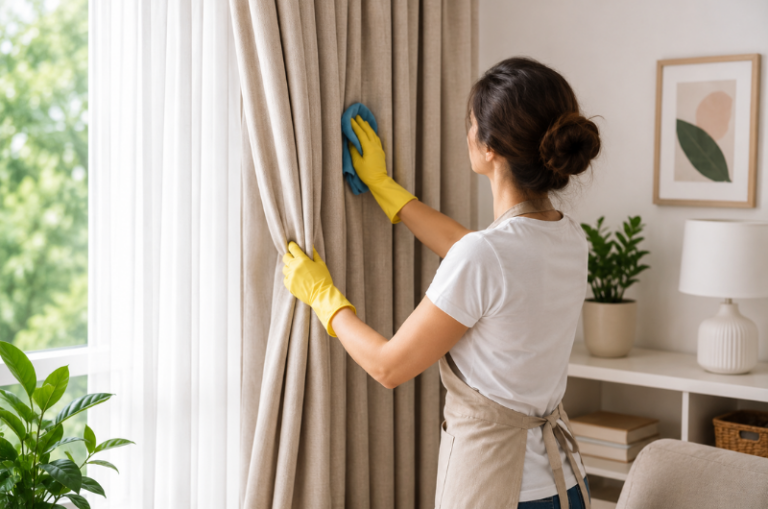
Curtains do a lot more than dress up your windows. They trap dust, pollen, cooking odours, pet dander, and even cigarette smoke, acting like a giant air filter for your home. The problem is, most people don’t think about how to clean curtains until they notice a musty smell or a visible layer of dust — by which point allergens have often been building up for months.
The truth is, there’s no single answer to “how often should curtains be cleaned.” It depends on the room, how the space is used, and what’s happening around the window. Below is a practical, room-by-room guide to help you figure out a cleaning schedule that actually makes sense for your home.
Why Curtain Cleaning Frequency Matters
Curtains are constantly exposed to airborne particles. Every time a window is opened, dust and pollen drift in and settle into the fabric. Over time, this buildup can:
- Trigger allergies and asthma symptoms
- Dull the fabric’s colour and texture
- Hold onto odours from cooking, smoke, or pets
- Shorten the lifespan of the material through embedded grit
Knowing how to clean curtains properly — and how often — keeps your home healthier and helps your window treatments last years longer.
Our specialists provide reliable cleaning, repairs, and alterations. contact us and book today.
Living Room: Every 3–6 Months
The living room usually sees the most foot traffic, sunlight exposure, and airborne dust of any room in the house. If you have pets that lounge near the windows, or family members who smoke indoors, lean toward the 3-month mark. For lower-traffic living rooms with minimal sun exposure, 6 months is generally sufficient.
Watch for: visible dust when you run a hand along the fabric, a change in colour where sunlight hits the curtain, or a faint musty smell when the curtains move.
Bedroom: Every 3–4 Months
Bedroom curtains are worth prioritising because you spend roughly a third of your life sleeping near them. Dust mites, pollen, and skin cells accumulate in bedroom fabrics quickly, which can affect sleep quality and aggravate allergies or asthma. If anyone in the household has respiratory sensitivities, consider cleaning bedroom curtains every 6–8 weeks instead.
Kitchen: Every 1–2 Months
Kitchens need the most frequent attention. Cooking releases grease particles and steam into the air, both of which settle on nearby fabric and can leave a sticky residue over time. Curtains near the stove or sink should be checked monthly, since grease buildup is harder to remove the longer it sits — and it can even become a fire hazard in extreme cases.
Bathroom: Every 1–2 Months
Bathroom curtains deal with a different challenge: moisture. High humidity from showers and baths creates the perfect environment for mould and mildew, especially in rooms with limited ventilation. If you notice any dark spotting or a persistent damp smell, that’s a sign cleaning is overdue, and you may need a specialist treatment rather than a standard wash.
Kids’ Rooms and Nurseries: Every 2–3 Months
Children’s rooms often need more frequent cleaning than adult bedrooms, particularly for younger kids and babies with developing immune systems. Curtains in nurseries collect dust just like anywhere else, but because little ones spend so much time in these rooms, keeping allergens to a minimum is especially important.
Dining Room and Home Office: Every 4–6 Months
These rooms typically see less airborne contamination than kitchens or living rooms, so curtains here can go a bit longer between cleanings. Still, keep an eye out near dining rooms if you entertain often, as food odours can cling to fabric even from a few doors away.
Factors That Speed Up How Often You Should Clean
Regardless of room, certain conditions mean you should clean curtains more frequently than the general guidelines above:
- Pets — shedding and dander settle into fabric quickly
- Smokers in the household — smoke particles cling to fibres and cause lingering odour
- Allergy or asthma sufferers — more frequent cleaning reduces dust mite exposure
- South- or west-facing windows — more direct sunlight means more UV damage and faster fading
- Homes near busy roads or construction — more outdoor pollutants entering through open windows
- Open-plan kitchens — grease and cooking particles travel further than in closed kitchens
Signs Your Curtains Need Cleaning Now
Don’t wait for a scheduled date if you notice any of these:
- A musty or stale smell when the curtains are moved
- Visible dust clouds when you shake the fabric
- Discolouration or yellowing, especially along the folds
- Increased sneezing or allergy symptoms near the window
- Stiffness or a change in how the fabric drapes
How to Clean Curtains at Home vs. Professional Cleaning
For lightweight, machine-washable curtains, a gentle cycle with a mild detergent — followed by air drying to avoid shrinkage — is usually enough for routine maintenance. Vacuuming curtains with an upholstery attachment between washes also helps reduce dust buildup.
However, many curtains, especially heavier fabrics like velvet, silk, or wool blends, and pleated or lined curtains, aren’t suitable for a washing machine. Incorrect washing can cause shrinkage, colour bleeding, or damage to the lining and structure. For these fabrics, professional dry cleaning is the safer option, and it’s particularly recommended for:
- Curtains that haven’t been cleaned in over a year
- Fabrics with mould, smoke odour, or heavy staining
- Delicate or high-value curtains you don’t want to risk in a home wash
- Large or heavy curtains that are difficult to manage at home
A Simple Curtain Cleaning Schedule
| Room | Recommended Frequency |
|---|---|
| Living Room | 3–6 months |
| Bedroom | 3–4 months |
| Kitchen | 1–2 months |
| Bathroom | 1–2 months |
| Kids’ Room/Nursery | 2–3 months |
| Dining Room/Office | 4–6 months |
Final Thoughts
Cleaning curtains regularly isn’t just about appearances — it’s about maintaining better air quality and a healthier home. Use this room-by-room guide as a starting point, then adjust based on your household’s specific needs, whether that’s pets, allergies, or sunlight exposure.
If your curtains are overdue for a deep clean, or you’re dealing with delicate fabrics that need expert care, the team at Elegance Dry Cleaners can help restore them safely and effectively — taking the guesswork out of how to clean curtains the right way.
Disclaimer: The information that is provided in this article is general in nature; it does not intend to disregard any of the professional advice.